Sleeper Raised Beds and Terracing on Sloping Gardens Across South Yorkshire: How to Level Without Digging Out Half the Plot
Sleeper raised beds and terracing across South Yorkshire, from Barnsley to Sheffield. How we plan, build and finish gardens that slope, drop or feel unworkable.

Why Sloping Gardens in South Yorkshire Need More Than a Flat Lawn
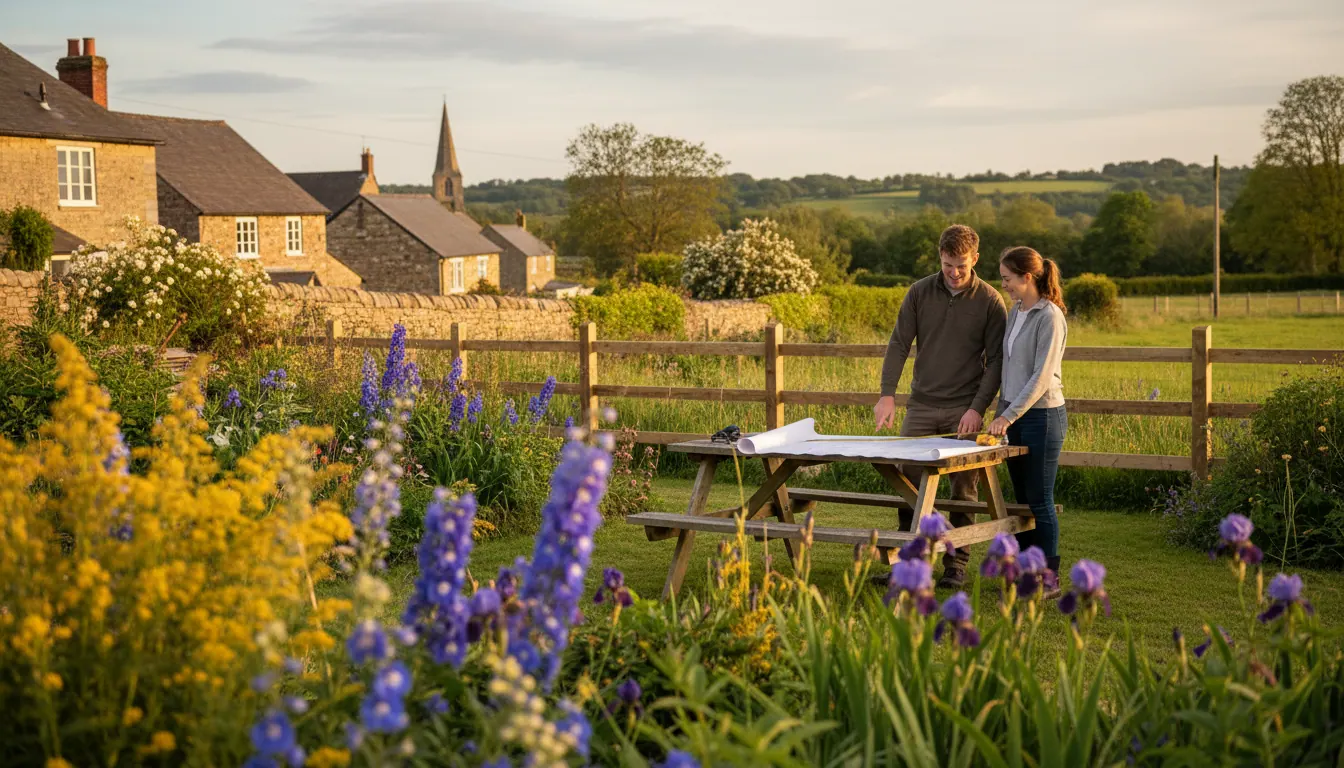
South Yorkshire gardens are rarely flat. From the hillside semis in Penistone and Hoyland to the terraced rows in Wombwell and Darfield, many plots drop away sharply, sit on clay-heavy ground or have levels that make the space feel awkward and unusable. A flat lawn laid over a slope just follows the contour and never quite works. You end up with a garden you don't use.
Sleeper raised beds and terracing change that. Done properly, they turn a difficult plot into something structured, practical and genuinely good to look at. We do a lot of this work across Barnsley, Sheffield and the surrounding South Yorkshire villages, and the same principles apply every time: get the groundwork right, use the right materials, and build for the long term.
What Sleeper Terracing Actually Involves
Terracing means cutting into a slope and creating two or more level platforms, held back by retaining walls. Railway sleepers are one of the most popular materials for those retaining walls, and for good reason. They're robust, they suit the character of South Yorkshire gardens, and when they're properly installed they last for years.
But "properly installed" is the key phrase. We see a lot of sleeper walls that have been put in without adequate backfill drainage, without deadmen anchors on taller structures, or sat directly on soft ground with nothing underneath. They lean, shift or rot from the base up within a few years.
Here's what a proper sleeper terrace actually involves:
- Dig-out and levelling. We strip back the existing ground and establish the new levels. On a significant slope, this means moving a fair amount of material, not just scraping the surface.
- Sub-base compaction. Every retained area needs a compacted base. We use MOT Type 1 hardcore, well compacted, so the sleepers and any paving on the upper level sit on something that won't move.
- Drainage behind the retaining wall. Water has to go somewhere. Without drainage gravel and a land drain behind the sleeper wall, water builds up behind it and the pressure eventually pushes it forward. This is the most commonly skipped step, and it's the one that causes most failures.
- Anchoring. For walls above a single course, we use deadmen, which are sleepers set perpendicular into the bank to tie the wall back into the ground. Without them, the wall is only as strong as the surface it's sitting on.
- Finishing the levels. Once the structure is in, we bring the upper levels to finished grade, whether that's for planting, paving or lawn.
Raised Beds: More Than Just Somewhere to Grow Things
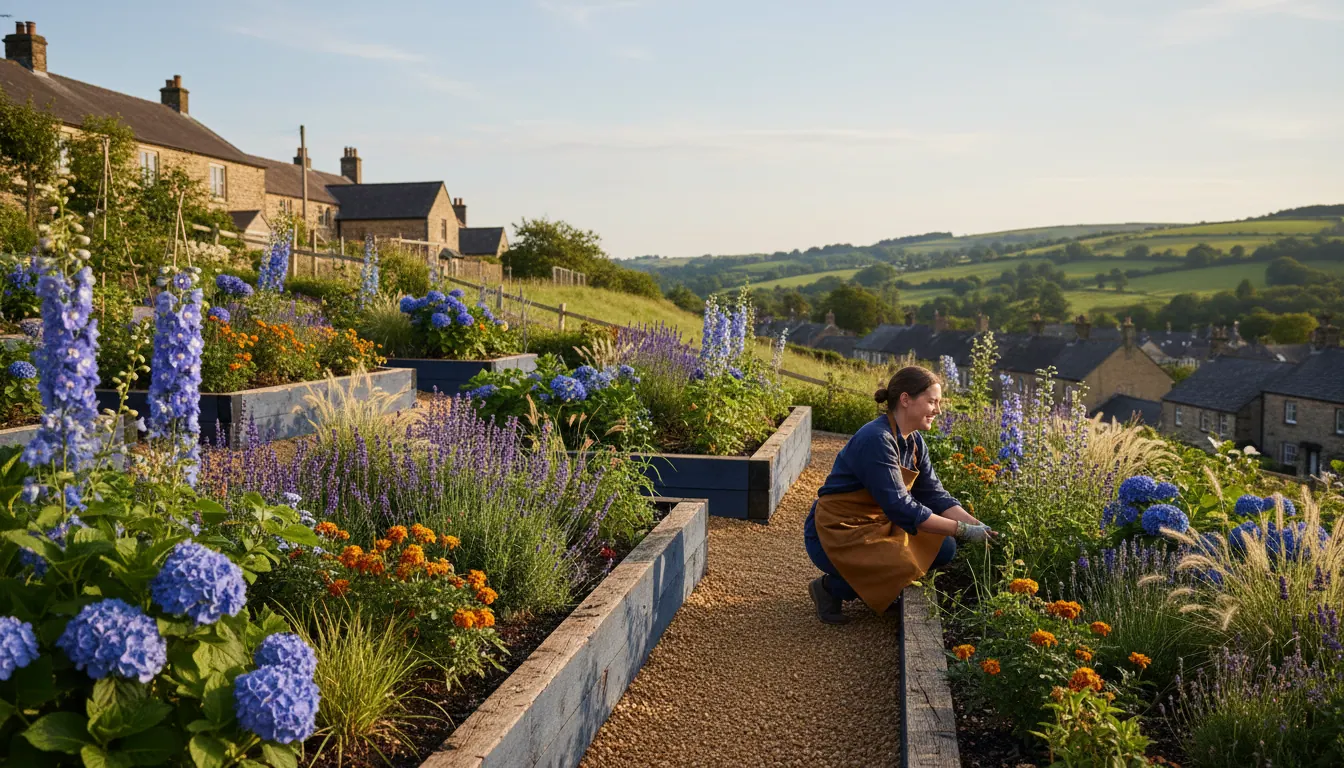
Sleeper raised beds do a specific job. They lift planting up to a usable height, define zones within the garden, and give structure to what can otherwise feel like a blank or shapeless space. In South Yorkshire, where clay soils can be heavy and poorly draining, raised beds also let you control the growing medium properly.
We build them in various configurations: single-course low borders, deeper double or triple-course beds for vegetables, stepped arrangements that follow a slope, and L-shaped or U-shaped layouts that frame a patio or seating area.
A few things we always do:
- Treat the timber correctly. We use new or reclaimed sleepers that are either pressure-treated or naturally durable. The base course takes the most punishment, sitting against damp soil, so we check every piece before it goes in.
- Leave drainage gaps. Even a raised bed needs to drain. We leave small gaps between sleepers at the base or drill drainage holes so water doesn't pool at the roots.
- Bed them level. Sounds obvious, but a raised bed that's out of level looks wrong and, if it's structural, creates uneven loading. We take time to get this right before any further courses go on.
Combining Sleepers with Paving or Turfing
Most of the gardens we transform involve more than one element. A typical project in Barnsley or Rotherham might include a new Indian sandstone or porcelain patio at the lower level, sleeper retaining walls stepping up to a second tier, raised beds along the boundary, and fresh turf on the upper lawn area.
Getting the levels to work across all of those elements is where the planning matters. The patio needs to fall away from the house so water drains off it. The lawn level needs to allow for topsoil depth above the compacted sub-base. The raised beds need to sit at the right height relative to the paving so the whole thing reads as one coherent design rather than a collection of separate jobs bolted together.
We covered the drainage side of patio work in detail in our article on garden patio drainage in Barnsley and Sheffield, and the same principle applies to any level surface in a terraced garden: falls matter, and they need to be planned from the start, not corrected at the end.
What Good Looks Like: A Real Customer's Experience
Julie Warriner had us fit her bathroom first, then called us back to sort the garden. Here's what she said:
Paul and Malc made a beautiful job of our bathroom so we had them back to sort out our garden, we are so pleased with the work they have done for us. Fantastic guys, with excellent communication, would highly recommend!!!!
That pattern, coming back for a second job, tells us something. When the first job is done properly and the communication is straightforward throughout, people trust us with the next thing on their list. Gardens are often that next thing.
New Sleepers or Reclaimed: Which Is Better?
This comes up on almost every job. Reclaimed railway sleepers have a weathered, characterised look that many people prefer, and they're often used on the continent. New pressure-treated softwood sleepers are more uniform and easier to work with on precise layouts.
Both can work well. The honest answer is that condition matters more than age. Reclaimed sleepers that are sound, dry and free from significant splitting will outlast new ones that have been stored badly or are already showing rot at the ends. We check every sleeper before it goes in. If a piece isn't right, it doesn't go in the ground.
One thing worth knowing: old BR (British Rail) sleepers were treated with creosote, which is now restricted for domestic use. Genuinely old creosoted sleepers should not be used in vegetable growing areas or anywhere children play regularly. If you're unsure what you have, ask us and we'll advise.
How We Approach a Sloping Garden in South Yorkshire
Every plot is different. A garden in Penistone on a hillside has different challenges to a flat-but-awkward plot in Wombwell or a narrow rear garden in Rotherham. We come out, look at the site, understand what you want to use the space for, and work out the best way to achieve it.
We don't give you a generic design off a template. We look at:
- The existing levels and how much material needs to move
- What the soil is like (clay-heavy ground in much of South Yorkshire needs particular attention to drainage)
- What you want from the space (seating area, growing space, a lawn for kids, or a mix of all three)
- How it connects to the house and any existing paving or structures
From there, we give you a clear picture of what's involved and a free quote once we understand the full scope.
If you're also thinking about patio work alongside the terracing, our article on patio subsidence in Sheffield and Rotherham explains why the sub-base preparation underneath any paved area is just as important as the sleeper work holding it in place.
Frequently Asked Questions
Can sleeper raised beds and terracing work in a small garden? Yes, and they often work particularly well in smaller plots. A single retaining wall and a raised bed can transform a narrow, sloping rear garden into two usable levels. The key is planning the proportions so the structure doesn't overwhelm the space.
How deep do sleepers need to be set into the ground? For a single-course low border, sleepers can sit on a compacted base without being buried. For anything acting as a retaining wall, especially two courses or more, the base course should be partially set into the ground and deadmen anchors used to tie the wall back. The taller the wall, the more important the anchoring.
My garden is on clay soil. Does that cause problems with sleeper terracing? Clay-heavy soil is common across South Yorkshire and it does need attention. Clay holds water and can exert significant pressure on a retaining wall when it's saturated. Good drainage behind the wall, using drainage gravel and a perforated land drain, is essential rather than optional on clay ground.
Do I need planning permission for sleeper raised beds or terracing? In most cases, no. Retaining walls and raised beds in a rear garden are generally permitted development. However, if a retaining wall is over a metre high adjacent to a highway, or over two metres elsewhere, permitted development limits may apply. We'll flag anything that looks like it needs checking when we come out to look at the site.
Get in Touch
If your garden slopes, drops away or just feels like wasted space, we'd be glad to come out and have a look. We cover Barnsley, Sheffield and across South Yorkshire, including Rotherham, Wombwell, Hoyland, Penistone, Dodworth, Darfield and the surrounding villages. Between us we have over 60 years of experience in the building industry, and garden terracing and sleeper work is something we do regularly and take seriously.
No obligation, no pressure. Just a straight conversation about what's possible and a free quote once we know what's involved. Take a look at the full range of what we do at P&M Home Improvements and get in touch when you're ready.